Do Penis Pumps Actually Work? The Honest Answer
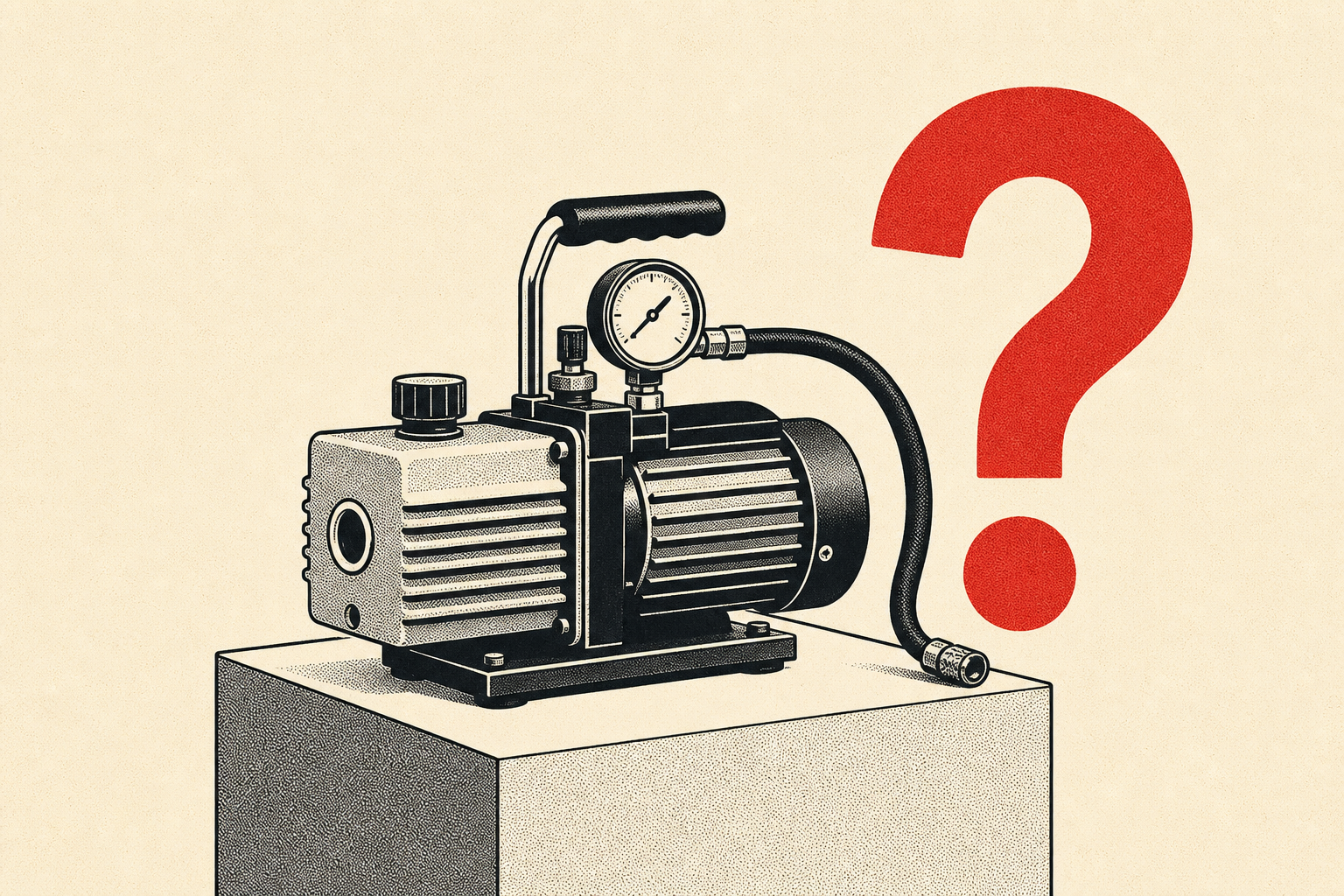
Yes and no, and anyone selling you a clean “yes” is lying. A pump does exactly what the box says: it hands you a firmer, fuller erection for a little while. It does not make you permanently bigger, no matter how religiously you grind away at it. Both things are true at the same time. Almost all the confusion online comes from people who pretend only one of them is.
So let’s rip the mechanism away from the wish.
What a pump actually does
A vacuum erection device is a plastic cylinder you drop over the penis. You pump the air out, the pressure crashes, blood floods into the tissue, and the penis swells and stiffens. Slide a constriction ring to the base, kill the vacuum, and that blood stays parked for a while. That’s the entire trick. Plumbing, not biology.
And it’s a genuinely useful trick. For a man whose erections have gone unreliable, a pump is a drug-free, surgery-free route to getting hard enough for sex. Urologists prescribe these things. They’re standard kit after prostate surgery, where keeping blood moving through the tissue helps it heal. None of that is snake oil.
What it is not is a growth machine. The swelling is your own tissue, packed with your own blood, pinned in place by a rubber ring. Pop the ring off and within an hour you’re right back where you started. The cylinder builds the penis about as much as a tight sleeve builds your forearm.
Temporary engorgement vs. permanent enlargement
Here’s the line the ads smudge on purpose.
Temporary engorgement is real and instant. Straight after a session the penis looks bigger and feels fuller. That’s measurable. It’s also gone fast. The whole reason the constriction ring exists is that the effect dies without it, and you’re not meant to leave a ring on for more than about half an hour anyway.
Permanent enlargement is the part that flatly does not happen. No pill and no pump permanently enlarges the penis. The studies people wave around for pump “gains” are short, tiny, and tend to measure the swollen state rather than a lasting change weeks later with everything relaxed. Control for that and the lasting difference rounds to zero. Want the full autopsy on why nearly every enlargement claim falls apart? We lay it out in can you actually increase penis size.
The honest sentence: a pump rents you size, it never buys it.
The risks nobody prints on the box
Because the swelling feels like progress, the temptation is to pump harder and longer. That’s the exact wrong instinct.
Too much vacuum bursts small blood vessels under the skin, leaving pinpoint red dots or bruising. A constriction ring left on too long starves the tissue of oxygen, which is painful and, past a point, dangerous. Aggressive pumping can also leave a squishy, waterlogged look from trapped fluid that people mistake for growth right before it deflates. It isn’t growth. It’s edema.
Used as directed, a pump is low-risk. Used like a gym machine, where more reps mean more gains, it can hurt you. The logic that builds biceps is dead wrong here. There’s no muscle being trained, just vessels being abused.
What actually changes how big you look
If the goal is looking bigger, two things move the needle, and one of them is free.
The free one is the fat pad. The base of the penis sits behind a cushion of pubic fat. Gain weight and that pad swells, swallowing visible length. Lose weight and the same length comes back. Plenty of men “gain” a centimeter or more just by dropping the gut, no device required. It’s the highest-yield move available to most people, and the one nobody markets, because there’s no product to attach.
The second is traction. Extender devices apply gentle, sustained tension over months, and in clinical use they can produce modest length gains. The catch is brutal: the real evidence sits mostly in men with Peyronie’s disease or recovering from surgery, the regimens demand hours a day for months, and the payoff is small. It’s a medical tool with narrow uses, not a confidence hack.
Surgery exists and it’s genuinely dangerous, with a real shot at scarring, lost function, and a worse-looking result than you walked in with. The serious medical literature treats it as a last resort, not a lifestyle pick.
Notice what’s missing from this list: pumps, pills, creams, jelqing routines. The two things that work are weight loss (instantly visible, free) and traction (small, slow, medically specific). Everything else is engorgement or hope.
You’re probably more average than you fear
A lot of pump shopping is driven by a number that’s simply wrong. Most men overestimate the average and underestimate themselves.
The biggest dataset we’ve got, Veale’s 2015 review of 15,521 men, pins average erect length at 13.12 cm (5.16 inches) and average erect girth at 11.66 cm (4.59 inches). Roughly 90% of men land between 10.4 and 15.9 cm erect. True micropenis, under about 9.3 cm, covers around 0.6% of men, which is genuinely rare. If you came here certain you’re below average, the math says you’re sitting comfortably inside the normal band. The full size statistics page has the distribution if you want your real percentile, and how to measure shows the method clinics use, so you’re comparing like with like. If you want the odds on the big end specifically, how rare is my size runs the numbers.
While we’re here: condom fit is set by girth, not length. A condom rolls down the shaft, so circumference is what matters. Nominal width is roughly your girth in centimeters divided by two, so an average 11.66 cm girth lands near the standard 52 to 54 mm condoms, while larger sizes run 56 to 64 mm. If condoms feel tight or loose, you want a different width, not a different length, and the condom size calculator hands you the number. Girth vs. length explains why girth is the dimension that actually governs fit.
Does any of this matter as much as you fear?
Almost certainly less than the marketing needs you to believe.
When researchers actually ask, preferences cluster just slightly above average and then flatten out, and girth tends to matter at least as much as length. Prause’s 2015 work nailed exactly that pattern. There’s no escalating scale where bigger keeps scoring higher. “Slightly above average and proportional” is the whole story, and most men are already standing on it. We dig into the gap between the worry and the data in does size matter.
So the pump question answers itself. As a tool for getting and keeping an erection, a vacuum device is legitimate and worth raising with a doctor. As a path to permanent size, it doesn’t deliver, and chasing it with longer, harder sessions mostly buys bruises. If you walked in ready to spend money on enlargement, the most effective move costs nothing: drop the fat pad, measure yourself honestly, and start from real numbers instead of a salesman’s. The homepage links the rest of the evidence if you want to keep going.
FAQ
Do penis pumps work permanently? No. A pump produces temporary engorgement that fades once the constriction ring comes off, usually within an hour. No pump permanently enlarges the penis. Its legitimate use is as an erectile-dysfunction aid, helping you get and hold an erection, not changing your baseline size.
Can a pump help with erectile dysfunction? Yes. This is what vacuum erection devices are actually built for, and doctors prescribe them, including during recovery after prostate surgery. They’re a drug-free, surgery-free way to get an erection. If ED is the issue, that’s a real conversation to have with a clinician.
What’s the safest way to look bigger? Lose the pubic fat pad. The base of the penis hides behind a cushion of fat, so dropping weight can reveal length you already own, for free and with no device. Traction devices can add modest length over months but are mainly indicated for Peyronie’s or post-surgical cases. See can you increase size for the full rundown.